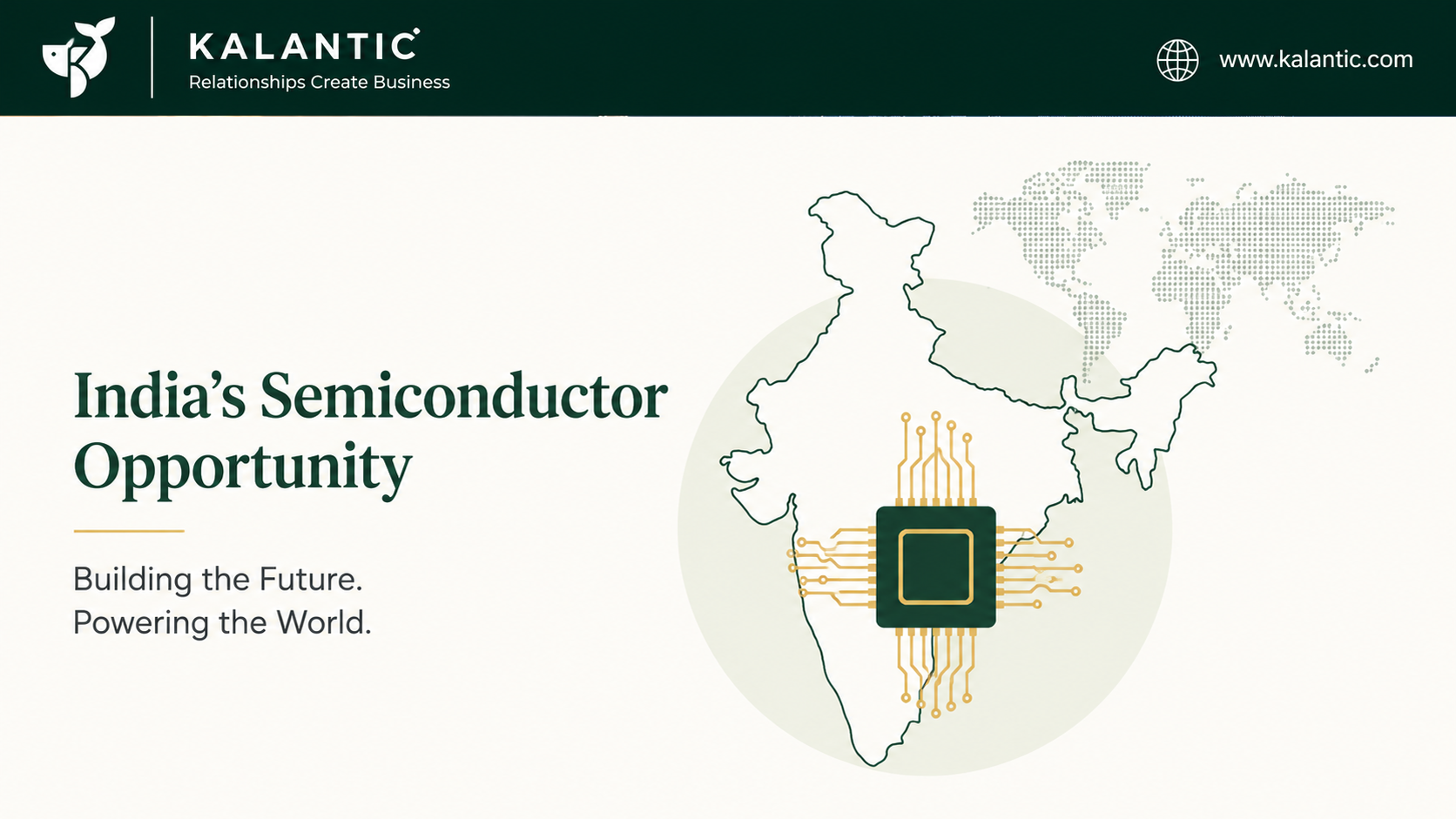
India is rapidly strengthening its semiconductor ecosystem through new investments, strategic partnerships, and government support. Recent reports that Tata Electronics and ASML are exploring manufacturing semiconductor equipment components in India signal that the country is evolving beyond electronics assembly into higher-value manufacturing. For international companies, this presents opportunities across engineering, automation, precision manufacturing, industrial equipment, and supply-chain partnerships.
Key Takeaways
- India's semiconductor ecosystem continues to mature.
- Opportunities extend far beyond semiconductor fabrication.
- Global companies are diversifying supply chains across multiple geographies.
- India's engineering talent and manufacturing capabilities continue to strengthen.
- Early market entrants may benefit from long-term ecosystem growth.
Why This News Matters
Recent reports suggest Tata Electronics and ASML are exploring the possibility of manufacturing components used in semiconductor equipment in India.
Although the announcement focuses on equipment components rather than chip fabrication itself, it represents an important milestone.
Modern semiconductor manufacturing depends on an extensive ecosystem of precision engineering, advanced machinery, specialized materials, clean-room technologies, industrial automation, testing equipment, and logistics.
As more parts of this ecosystem develop domestically, India's position within global semiconductor supply chains becomes increasingly significant.
India's Semiconductor Journey Is About Building an Ecosystem
When most people think about semiconductors, they imagine fabrication plants.
However, fabrication represents only one component of a much larger industry.
The semiconductor value chain includes:
- Precision engineering
- Advanced manufacturing
- Industrial automation
- Robotics
- Testing equipment
- Packaging
- Clean-room infrastructure
- Quality inspection
- Machine components
- Supply-chain logistics
- Engineering services
Developing these supporting capabilities often creates long-term opportunities for international companies.
Why Global Manufacturers Should Pay Attention
Supply Chain Diversification
Manufacturers worldwide continue diversifying production to reduce concentration risk.
Rather than relying heavily on one manufacturing location, many companies are establishing additional sourcing and production capabilities across Asia.
India has become an increasingly attractive destination within these diversification strategies.
Government Support
India continues investing heavily in semiconductor ecosystem development through policy initiatives, infrastructure, and investment incentives.
These initiatives aim to strengthen domestic manufacturing while attracting international technology companies.
Strong Engineering Base
India produces one of the world's largest engineering workforces.
This provides manufacturers access to skilled technical talent capable of supporting sophisticated industrial operations.
Manufacturing Experience
India already possesses deep expertise in industries such as:
- Electronics
- Automotive
- Pharmaceuticals
- Aerospace
- Industrial engineering
- Precision manufacturing
Many of these capabilities naturally complement semiconductor manufacturing.
Opportunities for International Companies
Businesses do not need to manufacture semiconductor chips to participate in India's growth.
Significant opportunities exist for companies providing:
| Sector | Opportunity |
|---|---|
| Industrial Automation | Factory automation systems |
| Precision Engineering | High-tolerance components |
| Robotics | Manufacturing automation |
| Industrial Software | Smart manufacturing solutions |
| Testing Equipment | Quality assurance systems |
| Clean-room Technology | Infrastructure development |
| Logistics | High-value supply chain services |
| Industrial Machinery | Manufacturing equipment |
| Materials | Specialized manufacturing materials |
As India's semiconductor ecosystem expands, demand for these capabilities is expected to grow.
Challenges Remain
Despite the momentum, India's semiconductor industry is still developing.
Companies evaluating opportunities should carefully assess:
- Infrastructure availability
- Regulatory requirements
- Supplier capabilities
- Skilled workforce availability
- Local partnerships
- State-specific incentives
- Logistics networks
Successful market entry requires strategic planning rather than reacting solely to headlines.
What This Means for International Businesses
The semiconductor industry is one of the world's most interconnected industries.
No country builds the ecosystem alone.
As India strengthens its capabilities, international companies have opportunities to participate through technology partnerships, manufacturing collaborations, supplier development, engineering services, and business development.
Businesses that begin building relationships today may be better positioned as the ecosystem matures over the coming decade.
Frequently Asked Questions
Is India manufacturing semiconductor chips today?
India is actively developing its semiconductor ecosystem through fabrication projects, semiconductor packaging, testing facilities, and supporting manufacturing capabilities. Multiple projects are currently underway.
Why is ASML important?
ASML is the world's leading supplier of advanced lithography systems used to manufacture semiconductor chips. Any expansion of ASML's manufacturing ecosystem into India would represent an important step in strengthening the country's semiconductor capabilities.
Does this opportunity only benefit semiconductor companies?
No.
Industrial automation companies, robotics manufacturers, engineering firms, logistics providers, software companies, machinery manufacturers, and precision engineering businesses may all benefit from ecosystem growth.
Should international companies enter India now?
Every business should evaluate opportunities based on its industry, customers, and long-term objectives. However, companies that establish relationships early often gain valuable market knowledge before industries become more competitive.
Final Thoughts
India's semiconductor ambitions extend beyond producing chips.
The larger story is the gradual development of an advanced manufacturing ecosystem capable of supporting global technology companies.
As supply chains become increasingly diversified, India is positioning itself as a strategic manufacturing and engineering partner rather than simply a large consumer market.
For international businesses, the question is no longer whether India will participate in the global semiconductor industry.
The more important question is how—and when—to become part of that journey.
About Kalantic
Kalantic helps international companies build customers, partners, and business in India.
Our services include:
- Market research
- Customer acquisition
- Partner identification
- Distributor evaluation
- Business development
- Commercial representation
Whether you're evaluating manufacturing, sourcing, partnerships, or market expansion, Kalantic helps you make informed commercial decisions with confidence.
Book an India Market Entry Discussion: https://kalantic.com/contact
Sources
The Economic Times. Tata Electronics, ASML explore making chip equipment components in India. https://economictimes.indiatimes.com/industry/cons-products/electronics/tata-electronics-asml-explore-making-chip-equipment-components-in-india/
Ministry of Electronics & Information Technology (MeitY). https://www.meity.gov.in/
India Semiconductor Mission. https://ism.gov.in/
Invest India. https://www.investindia.gov.in/
Department for Promotion of Industry and Internal Trade (DPIIT). https://dpiit.gov.in/
Ready to Explore India?
Expanding into India requires more than market research—it requires the right customers, partners, and commercial strategy. Kalantic helps international companies validate opportunities, identify customers and channel partners, and build a sustainable business presence in India. Whether you’re evaluating India for the first time or accelerating your expansion, our team can help you make informed decisions with confidence.
Book an India Market Entry Discussion
Or email us at: info@kalantic.com