India Is Becoming Harder for Global Manufacturers to Ignore
Global supply chains are being redesigned.
For years, companies made manufacturing decisions largely around cost, scale and proximity to existing supplier networks. Today, the equation is becoming more complex.
Geopolitical risk, supply-chain concentration and the need for greater resilience are pushing companies to reconsider where they manufacture, source and invest.
India is increasingly appearing in those conversations.
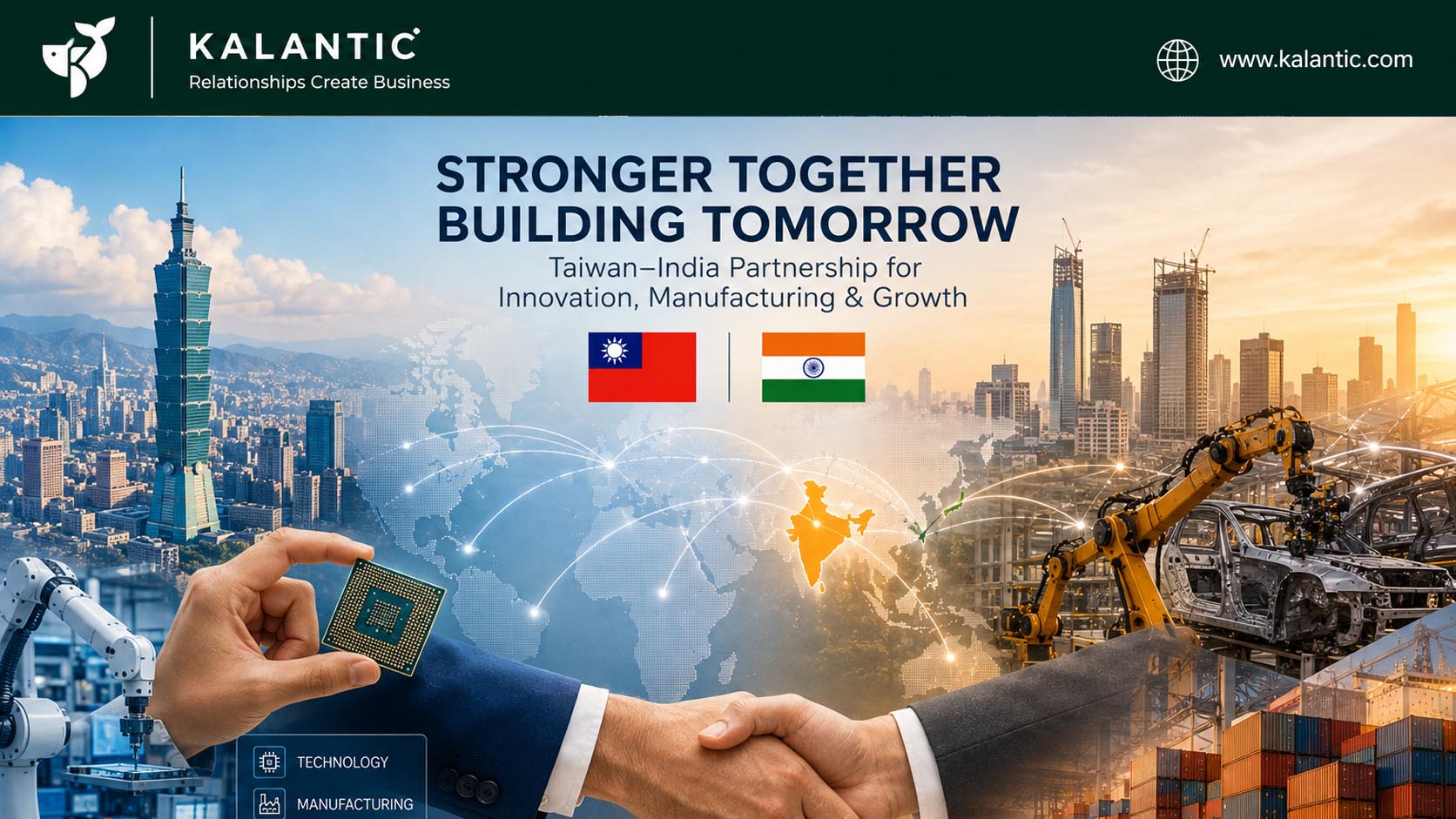
A fresh analysis published in Taiwan on August 12 highlights this shift, arguing that Taiwanese businesses should take a closer look at India as global supply chains continue to evolve.
The significance goes beyond Taiwan.
It reflects a broader question facing international companies:
Is India becoming a market they sell into — or a market they build from?
From Market Opportunity to Manufacturing Opportunity
India has traditionally attracted international businesses because of its enormous domestic market.
That remains one of its strongest advantages.
But the opportunity is expanding.
International companies are increasingly evaluating India for manufacturing, component sourcing, technology partnerships, contract production and supply-chain diversification.
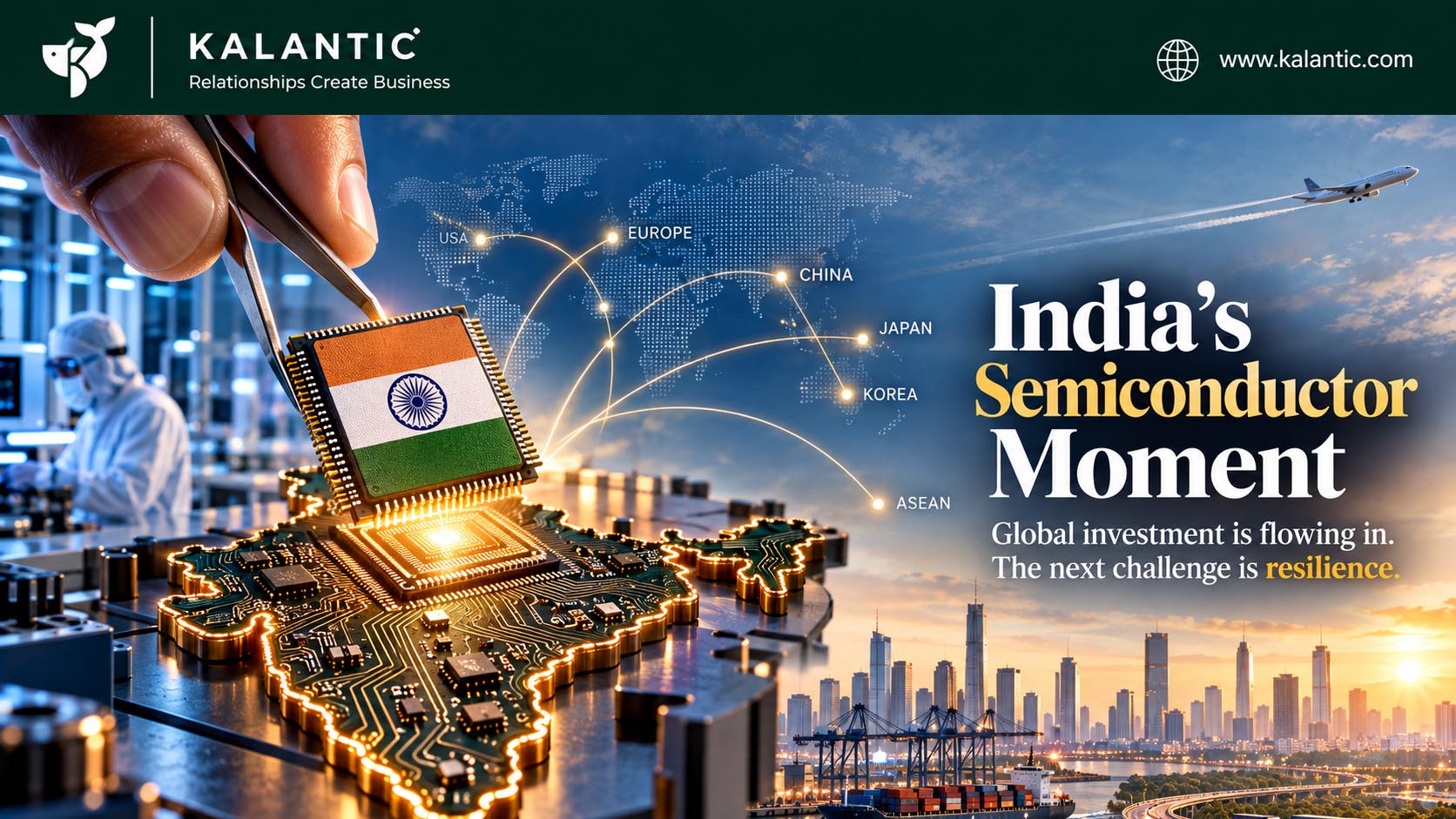
Taiwan is particularly interesting in this context because of its strengths in electronics, precision manufacturing, machinery, semiconductors and industrial technology.
There are already signs of deeper industrial cooperation.
Taiwanese technology is supporting major semiconductor projects in India, while Indian and Taiwanese organisations are also creating opportunities for cooperation in smart manufacturing, automation and industrial technology.
The relationship is therefore moving beyond simple trade.
It is increasingly about industrial capability.
The Business Environment Is Changing
One of the important points raised in the latest Taiwan analysis is that India's business environment has undergone significant institutional changes over the past decade.
The reforms cover areas including taxation, finance, labour, trade and investment.
The direction is particularly important for international companies because predictability matters almost as much as cost.
The 2026–27 Union Budget has also introduced measures aimed at digital trade facilitation, greater tax certainty, reduced compliance burdens and more trust-based customs processes.
For an international company considering a multi-year investment, these issues can materially influence the decision.
A factory can be built in months or years.
A supply chain may operate for decades.
That requires a business environment where companies can plan with reasonable confidence.
Why Taiwan Matters
Taiwanese companies have spent decades building highly sophisticated manufacturing ecosystems.
Their competitive advantage is not simply the ability to manufacture a product.
It is the ability to build networks of suppliers, technology partners, engineering talent and specialised manufacturers around that product.
That makes Taiwan an interesting partner for India's manufacturing ambitions.
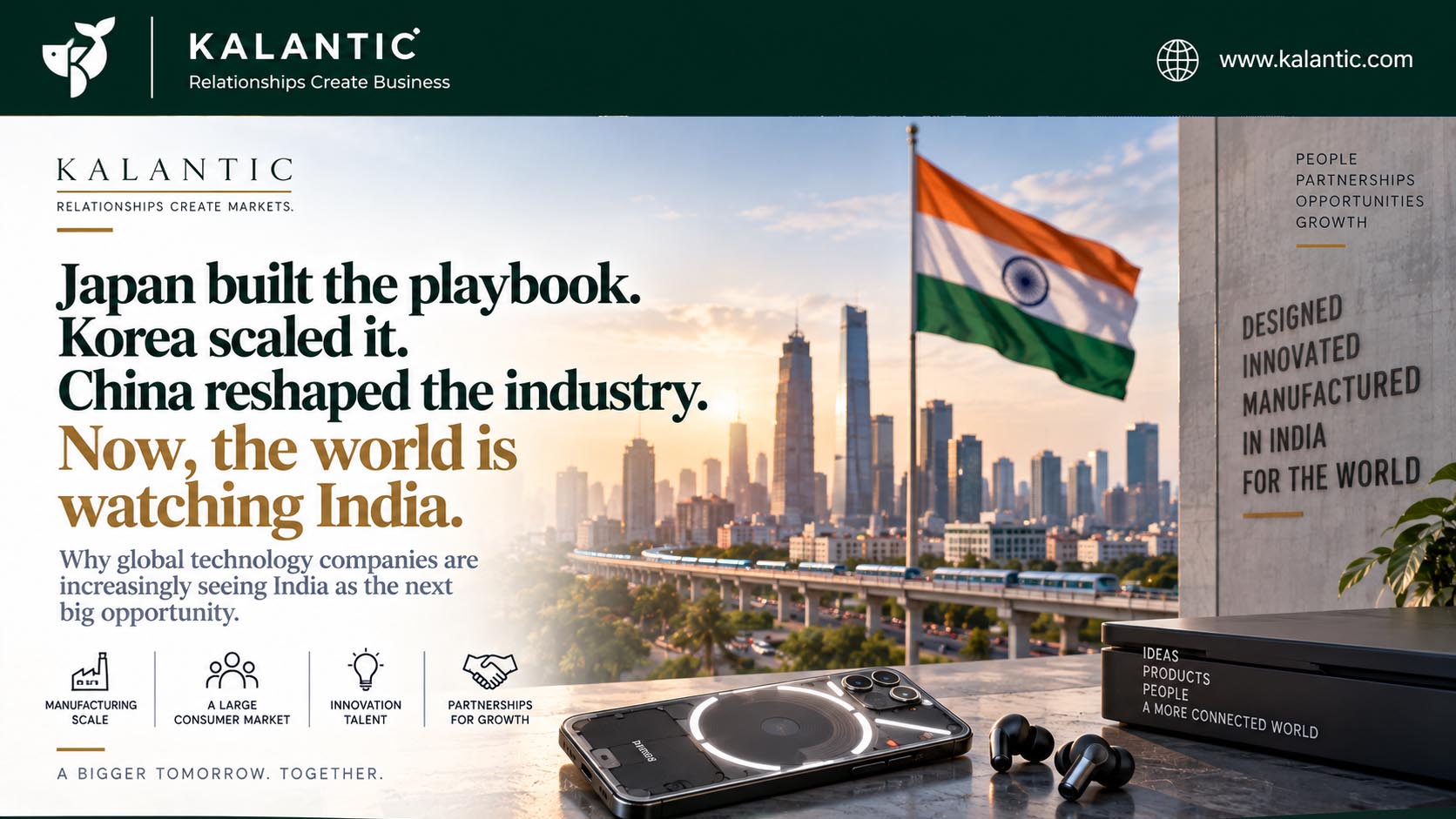
India brings:
- A large domestic market
- A growing manufacturing base
- Expanding infrastructure
- A large talent pool
- Increasing integration with global supply chains
- Government support for strategic industries
Taiwan brings:
- Precision manufacturing expertise
- Industrial technology
- Electronics capabilities
- Semiconductor expertise
- Advanced machinery
- Deep supplier relationships
The combination could create opportunities well beyond conventional import-export relationships.
The Bigger Opportunity Is the Ecosystem
This is where international companies need to think differently about India.
Entering a market is not simply about incorporating a company or opening a factory.
The difficult part often begins afterwards.
Who are the right customers?
Who can become a reliable local supplier?
Which distributors already understand the market?
Which partners can help navigate regulations?
Where can specialised talent be found?
Who can provide after-sales support?
Which relationships can accelerate market access?
These questions rarely appear in a market-entry spreadsheet.
Yet they can determine whether an international expansion succeeds.
India May Become More Than a China+1 Strategy
The China+1 conversation initially positioned India as one possible alternative to concentrated manufacturing in China.
That was useful, but incomplete.
India's opportunity is potentially much larger.
It can serve simultaneously as:
A consumer market.
A manufacturing base.
A sourcing destination.
A technology partner.
A regional export platform.
A services and engineering hub.
For international companies, this creates a more interesting strategic proposition.
Instead of asking whether India can replace another manufacturing location, companies should ask where India can complement their existing global footprint.
That is a much more useful question.
What International Companies Should Do Now
Companies evaluating India should not wait until the decision to invest has already been made.
The groundwork can begin much earlier.
A sensible market-entry process could involve:
Mapping the Indian market and identifying priority sectors.
Identifying potential customers, suppliers and strategic partners.
Understanding the regulatory and commercial environment.
Testing demand before committing significant capital.
Building relationships with relevant industry stakeholders.
Evaluating possible manufacturing, distribution or partnership models.
Developing a local network before scaling the operation.
The objective is not simply to "enter India."
It is to arrive with enough knowledge and relationships to operate effectively.
The Next Phase of India's Global Manufacturing Story
The most interesting part of the current shift may not be the number of factories being announced.
It is the number of international companies beginning to think about India differently.
Taiwanese manufacturers are one example.
Japanese companies, European businesses, American corporations and companies from other Asian manufacturing economies are all evaluating how India fits into their long-term strategies.
The global manufacturing map is becoming more distributed.
India has an opportunity to become one of the important nodes in that new network.
But manufacturing ecosystems are not built by capital alone.
They are built through suppliers, customers, technology, talent and — ultimately — relationships.
The question for international companies is no longer simply whether India is ready for them.
It is whether they are ready to build the relationships required to succeed in India.
Sources
- Commonwealth Magazine, Taiwan — "As Global Supply Chains Reshape, Taiwanese Businesses Cannot Ignore India", August 12, 2026.
- National Small Industries Corporation / Ministry of MSME — India-Taiwan Smart Manufacturing & AI cooperation programme, 2026.
- Press Information Bureau, Government of India — semiconductor manufacturing projects and Taiwan technology partnerships.
Ready to Explore India?
Expanding into India requires more than market research—it requires the right customers, partners, and commercial strategy. Kalantic helps international companies validate opportunities, identify customers and channel partners, and build a sustainable business presence in India. Whether you’re evaluating India for the first time or accelerating your expansion, our team can help you make informed decisions with confidence.
Book an India Market Entry Discussion
Or email us at: info@kalantic.com