
International Companies Are Not Just Entering India. They Are Choosing Where to Build.
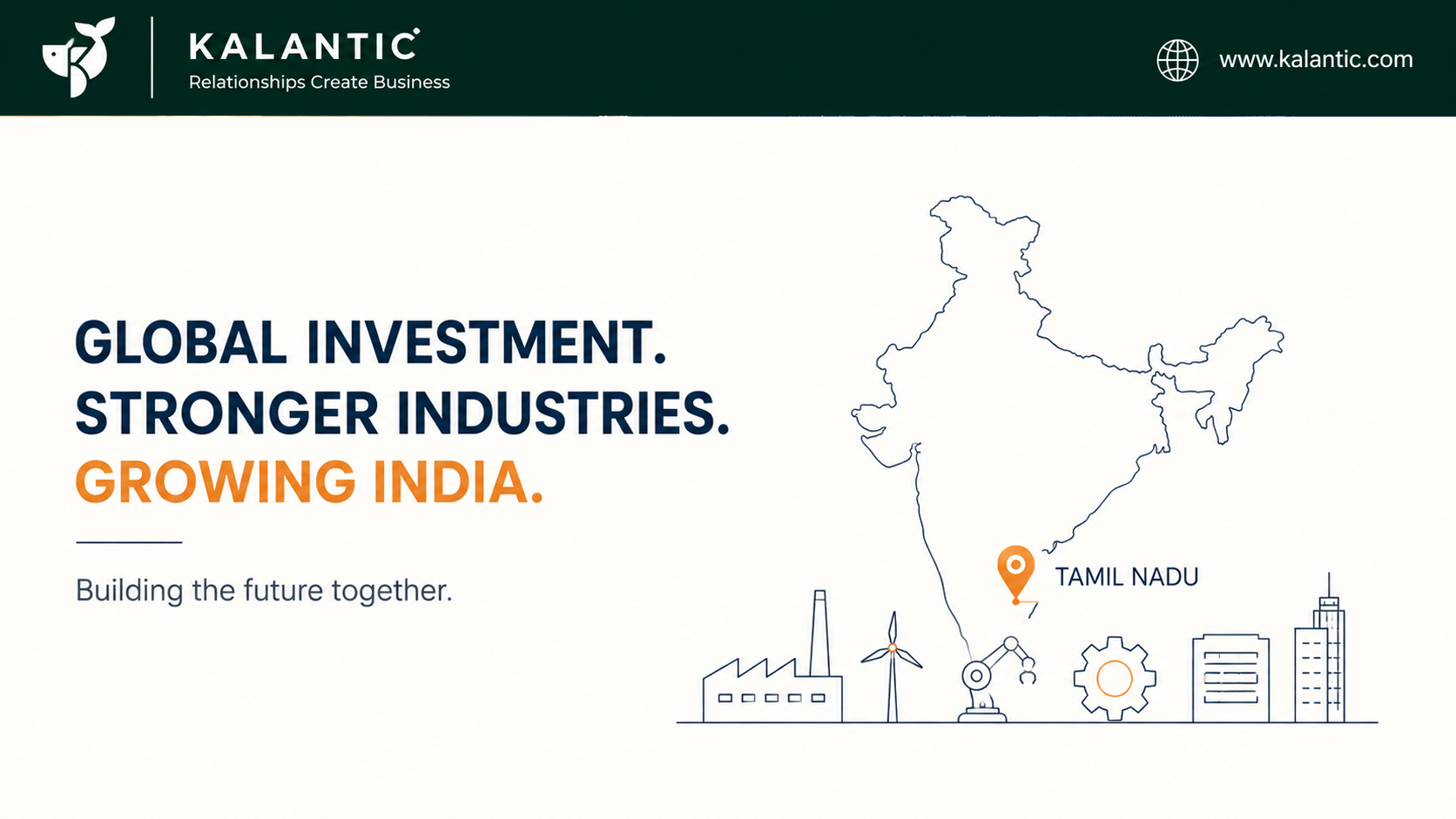
A fresh wave of investment commitments in Tamil Nadu offers an interesting window into how international companies are approaching India.
On August 13, Tamil Nadu announced agreements worth approximately ₹15,050 crore for 16 projects involving overseas investors.
The companies include France's Saint-Gobain, US-based Super Micro Computer and Germany's Daimler India Commercial Vehicles.
Across the wider investment conclave, 97 agreements worth ₹67,452 crore were signed, with the projects expected to generate more than 100,000 jobs.
The headline numbers are significant.
But the more interesting story is where these investments are going and why.
India Is Becoming a Network of Industrial Clusters
International companies rarely choose a country based on one factor.
Cost matters.
Market size matters.
Infrastructure matters.
Talent matters.
But increasingly, companies are also asking a different question:
What ecosystem already exists around the investment?
Tamil Nadu offers a useful example.
The state has developed strong clusters across automobiles, electronics, engineering, industrial manufacturing, chemicals, technology and increasingly advanced manufacturing.
Chennai and its surrounding industrial corridors already host global companies and large supplier networks.
That creates an important advantage.
A new international investor does not necessarily have to build an entire ecosystem from scratch.
It can plug into one that already exists.
The Importance of Existing Supply Chains
Consider the automobile industry.
A vehicle manufacturer does not operate in isolation.
It depends on hundreds or thousands of suppliers covering components, engineering, logistics, tooling, technology, maintenance and specialised services.
The same principle applies to electronics and advanced manufacturing.
When an international company evaluates a new manufacturing location, the question is therefore not simply:
"Can we build a factory here?"
It is:
"Can we build an efficient operation here?"
That distinction matters.
A location with established suppliers, logistics infrastructure, skilled workers and supporting industries can significantly reduce the complexity of expansion.
This is one reason industrial clusters can become self-reinforcing.
More companies attract more suppliers.
More suppliers attract more companies.
And over time, the ecosystem itself becomes a competitive advantage.
Why Tamil Nadu Is Interesting
Tamil Nadu has long been one of India's major manufacturing centres.
Its industrial base spans automobiles, electronics, engineering, chemicals, textiles, aerospace and other sectors.
The state is also home to manufacturing operations of companies including Hyundai, Renault, TVS, Daimler and Saint-Gobain, alongside major electronics and semiconductor-related investments.
That creates something international businesses value:
industrial depth.
A company entering an established cluster can potentially access:
- Existing supplier networks
- Skilled technical talent
- Logistics infrastructure
- Engineering capabilities
- Supporting manufacturers
- Established export channels
- Local business relationships
This can make the decision to expand considerably easier.
The Latest Investments Reflect a Broader Pattern
The companies announced in the latest investment round come from different industries and countries.
Saint-Gobain is expanding its manufacturing footprint.
Daimler India Commercial Vehicles has proposed a ₹4,000 crore expansion in Tamil Nadu.
US-based Super Micro Computer is among the international companies participating in the new investment commitments.
These are not identical businesses.
Yet they share a common requirement:
They need an ecosystem.
Manufacturing cannot be separated from the network that supports it.
The India Opportunity Is Becoming More Regional
For international companies considering India, this is an important shift in thinking.
"Entering India" is too broad a strategy.
India is not one industrial market.
It is a collection of regional ecosystems with different strengths.
One state may offer stronger electronics capabilities.
Another may have an established automotive ecosystem.
Another may be particularly attractive for pharmaceuticals.
Another may offer advantages in aerospace, chemicals, renewable energy or textiles.
The right question is therefore not:
"Is India the right country?"
It is:
"Which Indian ecosystem is right for our business?"
That is a much more useful starting point.
What This Means for International Businesses
Companies considering India should increasingly evaluate locations through an ecosystem lens.
Before committing capital, they should understand:
1. Where are the customers?
A manufacturing facility is more valuable when it is close to the market it serves.
2. Where are the suppliers?
The availability of local and regional suppliers can materially affect operating costs and speed.
3. Where is the talent?
Engineering-intensive businesses need access to specialised skills, not simply a large labour pool.
4. What infrastructure already exists?
Ports, highways, airports, industrial parks and logistics networks can influence the viability of an operation.
5. Who are the local partners?
This is perhaps the most underestimated factor.
A company's ability to identify credible local partners can influence everything from customer acquisition to supplier development and regulatory navigation.
The Real Competitive Advantage May Be the Network
Investment announcements often focus on capital expenditure.
But the long-term competitiveness of an operation depends on what surrounds that investment.
A ₹4,000 crore factory does not operate alone.
It needs suppliers.
It needs customers.
It needs logistics.
It needs technology.
It needs talent.
It needs service providers.
It needs government and industry relationships.
In other words:
It needs a network.
This is why industrial clusters matter so much to international companies.
The network can be as valuable as the physical infrastructure.
India’s Next Phase of Global Manufacturing
India's manufacturing story is increasingly moving beyond the traditional "low-cost alternative" narrative.
International companies are evaluating India for market access, manufacturing, supply-chain diversification, engineering, technology and exports.
The latest investment commitments in Tamil Nadu are another indication of this broader shift.
The opportunity for international businesses is significant.
But successful market entry will require more than selecting a state and announcing an investment.
It will require understanding the ecosystem.
Finding the right people.
Building the right partnerships.
Developing customers.
Identifying suppliers.
And establishing relationships before the investment reaches the ground.
Because ultimately, markets are not built by factories alone.
They are built by the relationships and ecosystems around them.
Sources
Reuters, August 13, 2026 — Tamil Nadu signs pacts for $1.58 billion in new projects by overseas investors.
The Indian Express, August 13, 2026 — Tamil Nadu signs 97 MoUs worth ₹67,452 crore, projecting more than 100,000 jobs.
Economic Times, August 13, 2026 — Daimler India Commercial Vehicles announces proposed ₹4,000 crore expansion in Tamil Nadu.
Ready to Explore India?
Expanding into India requires more than market research—it requires the right customers, partners, and commercial strategy. Kalantic helps international companies validate opportunities, identify customers and channel partners, and build a sustainable business presence in India. Whether you’re evaluating India for the first time or accelerating your expansion, our team can help you make informed decisions with confidence.
Book an India Market Entry Discussion
Or email us at: info@kalantic.com